
Oct 30, 2026Showroom & Staging
bulk-prop-tvs-furniture-rental-home-staging
Source bulk dummy TVs for furniture rental and home staging projects. Plan reusable inventory, mixed sizes, sample orders, and B2B replenishment.
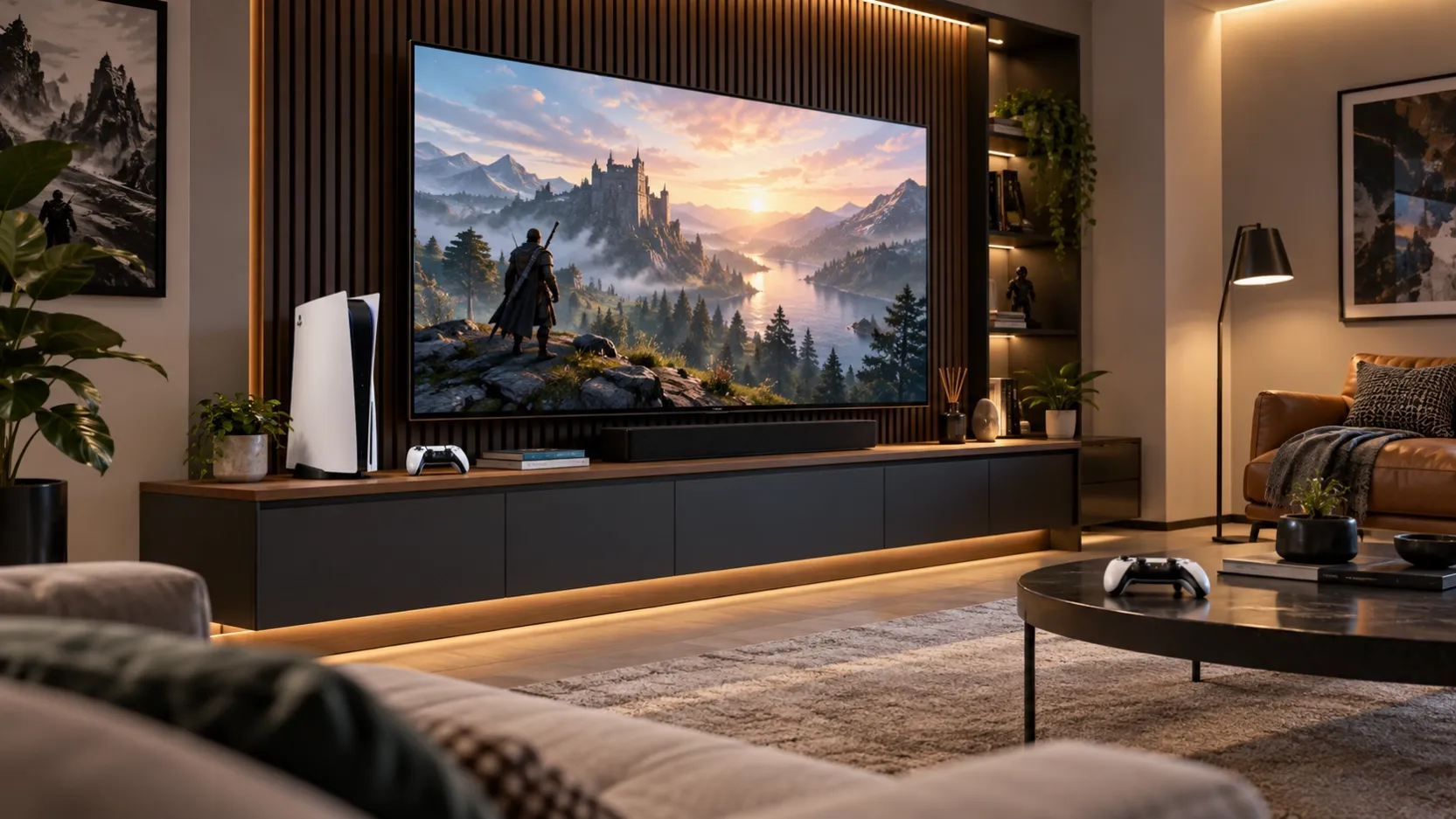
Bulk Prop TVs for Furniture Rental & Home Staging Companies
Reusable Dummy TV Supply for Staging Inventories, Model Homes and Multi-Property Projects
One Inventory. Multiple Properties. Repeatable Staging.
For furniture rental companies and professional home staging businesses, every property is different. A compact apartment may need a modest television display, while a luxury residence or large model home may require a much more substantial media-wall presentation.
Yet the operational challenge is often the same: how can staging teams deliver convincing interiors across multiple properties without purchasing and managing unnecessary functional electronics?
A professionally designed non-functional television can help.
YIJIA Props | DummyDevices supplies realistic prop TVs for furniture rental companies, home staging professionals, model-home operators, and commercial display projects.
Our dummy TVs are developed with real television appearance and proportions as references, providing the visual presence of a television without requiring video playback, streaming services or electrical power for standard prop-display use.
For businesses managing multiple properties, the opportunity goes beyond buying a single dummy TV.
It is about building an appropriate inventory of display products that can support repeat projects, different room sizes and future supply requirements.
1. Why Furniture Rental Companies Need a Different Approach to Display Electronics
Furniture rental companies manage physical inventories that may move between apartments, residential developments, temporary accommodation, corporate housing and staged properties.
Their operational priorities can include:
- Preparing complete rooms for new projects
- Delivering coordinated furniture and accessories
- Tracking inventory across locations
- Managing installation and removal
- Protecting products during transportation
- Replacing damaged or missing items
- Maintaining consistent presentation standards
When a television is included only to complete the visual appearance of a room, an operational television may provide functionality that the project does not actually need.
A non-functional prop TV can be considered for these situations.
It creates a recognizable television presence while eliminating the need for software setup, streaming accounts, and powered-screen operation.
For a furniture rental provider, the question becomes:
Could an approved prop TV model become a repeatable component within our staging inventory?
That is a more valuable purchasing question than simply asking for the cheapest individual television prop.
2. Home Staging Companies: Build an Inventory That Supports Multiple Properties
Professional home stagers work across different property types, architectural styles, and interior layouts.
The same staging company may prepare:
- Compact apartments
- Suburban family homes
- Luxury penthouses
- Newly built townhouses
- Vacant residential properties
- Developer model homes
- Sales galleries
- Furnished rental properties
A single television size rarely works equally well in every environment.
A more practical approach is to develop a controlled selection of prop TVs by room type and display requirement.
Compact Apartments and Smaller Living Rooms
A smaller prop TV may complement compact sofas, narrower media consoles, and limited wall space.
The objective is to make the room feel complete without allowing a television display to dominate the furniture.
Standard Family Living Rooms
A 55-inch or 65-inch prop TV may provide an appropriate visual anchor for many contemporary living-room settings.
The final size should be chosen by comparing the actual exterior dimensions with the console, wall and furniture layout.
Premium Homes and Larger Media Walls
A 75-inch or larger prop TV may suit wider walls, larger living rooms and high-end residential presentations.
Large-format models should be selected with particular attention to handling, installation, freight and storage requirements.
Bedrooms and Secondary Rooms
Some bedroom settings benefit from a smaller television model, while others may be better presented without one.
Staging is not about placing a television in every room.
It is about using the right display element where it supports the intended lifestyle presentation.
3. Why Realistic Appearance Matters in Professional Staging
In a staged property, the television is rarely the main product being sold.
The primary focus may be the home, its interior layout, the furniture, or the lifestyle the staging company wants potential occupants to imagine.
A television display should support that presentation.
YIJIA Props develops dummy TVs using real television models and physical proportions as design references.
The objective is to provide realistic visual characteristics, including:
- Television-like exterior proportions
- Appropriate frame presentation
- Static screen imagery
- Realistic visual scale
- A coordinated appearance within furnished rooms
A professional prop TV should look appropriate beside a contemporary media cabinet, a sectional sofa, or an architectural feature wall.
The actual appearance depends on the selected model, screen graphics, finish and lighting environment.
For this reason, we recommend evaluating real product photographs or a physical sample before approving a model for a larger staging program.
A good display prop supports the room. It should not distract from it.
4. Reusable Staging Inventory: The Business Opportunity
One of the most important considerations for a furniture rental or home staging company is whether a display product can be incorporated into an existing inventory-management process.
A prop TV may be used in one property, removed after the project, and redeployed to another location if its condition, handling requirements, and installation configuration permit.
This creates a potential inventory-based purchasing model.
A Typical Project Cycle
Warehouse → Property Installation → Staging Period → Collection → Inspection → Storage → Next Project
For a reusable display program, each stage matters.
Warehouse Preparation
Before dispatch, the team should identify the product model, size, support accessories, and destination.
Installation
The prop TV should be installed using a configuration appropriate to the actual product and display environment.
Project Use
During staging, the product provides a static television appearance without requiring electronic operation.
Collection
After the property has completed its staging period, the team retrieves the display and its accessories.
Inspection
The product should be checked for cosmetic damage, attachment condition, screen presentation, and missing components.
Storage and Redeployment
Where practical, suitable protective packaging should be retained and used for future transportation.
This approach helps teams evaluate whether prop TVs fit into their broader reusable staging operations.
Repeated use is a potential benefit, not a guarantee of unlimited product life. Actual service life depends on materials, handling, transport conditions, storage, and maintenance.
5. Choosing the Right Mix of Prop TV Sizes
Furniture rental companies and staging operators often benefit from considering multiple display sizes rather than choosing a single size for every project.
The following table provides an illustrative planning framework.
Prop TV Size | Potential Application |
|---|---|
32–43 inches | Bedrooms, compact apartments, smaller media consoles |
50–55 inches | Standard apartment living rooms, smaller family spaces |
65 inches | Contemporary living rooms, model homes, larger media furniture |
75 inches | Spacious living rooms, premium residential staging |
85 inches and above | Large media walls, luxury model homes, flagship displays |
These are staging considerations, not mandatory design rules.
A large television may feel out of proportion in a smaller room, while a small display may appear visually weak against an oversized media wall.
For repeated staging programs, we recommend documenting which sizes work best with particular furniture collections and room layouts.
A Practical Mixed-Size Inventory Example
A staging company building its initial prop TV inventory might evaluate:
Compact Property Kit
- 2 × 43-inch prop TVs
- 2 × 55-inch prop TVs
Standard Residential Kit
- 3 × 55-inch prop TVs
- 2 × 65-inch prop TVs
Premium Property Kit
- 2 × 65-inch prop TVs
- 2 × 75-inch prop TVs
These are illustrative combinations, not fixed commercial packages or confirmed stock bundles.
Actual quantities should be based on the company's project pipeline, property types, storage capacity, and expected inventory turnover.
6. A Real Product Example: YIJIA 65-Inch Dummy TV
For buyers evaluating a standard living-room display model, the current YIJIA 65-inch prop TV provides a practical reference.
The product is intended for non-functional visual presentation and uses real television design proportions as references.
Selected 65-Inch Product Information
Product Detail | Reference Specification |
|---|---|
Product | 65-Inch Dummy TV / Prop TV |
Nominal Size | 65 inches |
Function | Non-functional television display model |
Screen Presentation | Static visual image |
Electronic Operation | No video playback, streaming, or apps |
Overall Width — Engineering Drawing | Approx. 1446 mm |
TV Body Height — Drawing | Approx. 830.5 mm |
Overall Height with Feet — Drawing | Approx. 885.9 mm |
Overall Depth with Feet — Drawing | Approx. 247.1 mm |
Approximate Net Weight | 14 kg |
Materials | ABS / Acrylic / PVC |
Mounting-Hole Spacing — Drawing | 400 × 200 mm |
Mounting Fastener Indication | M6 |
Packing Quantity | 1 unit per carton |
Reference Carton Size | Approx. 1600 × 200 × 930 mm |
Reference Gross Weight | Approx. 14.9 kg per carton |
Specification Note: These are reference details for the current 65-inch model. Actual dimensions, weight, supplied accessories, and packaging must be confirmed for the selected production configuration. The stated mounting-hole pattern does not guarantee compatibility with every bracket or installation.
Why These Details Matter to Rental and Staging Operators
A staging company needs more than an attractive product image.
The team may need to know:
- Will the television fit the selected media cabinet?
- Can the display be transported through the property?
- What handling arrangements are appropriate?
- Is a tabletop support configuration available?
- Which accessories must accompany the product?
- How much storage space is required?
- What is the actual packed shipment size?
Providing these details at the purchasing stage helps the buyer evaluate operational suitability before committing to multiple units.
A non-functional television should not automatically be described as ultra-lightweight or effortless to move. The current 65-inch reference model, for example, has an approximate net weight of 14 kg.
Handling and installation requirements must be evaluated for the actual product.
7. Tabletop Displays vs. Wall-Mounted Staging
Professional staging teams may use tabletop and wall-mounted arrangements depending on the property.
Tabletop Display
A prop TV placed on a compatible media cabinet may be an option where the selected model has a suitable support arrangement.
Before installation, confirm:
- Cabinet dimensions
- Product footprint
- Support feet or stand compatibility
- Stability of the complete arrangement
- Whether the accessories are included
- Requirements for safe handling and removal
A tabletop configuration may be particularly relevant in properties where the final resident is expected to make their own television installation decisions.
Wall-Mounted Display
Wall-mounted prop TVs may suit certain media-wall presentations.
However, the mounting arrangement must be assessed for the actual model, bracket, wall structure and installation conditions.
The use of a dummy TV does not automatically eliminate wall damage, mounting risk or the need for appropriate installation procedures.
Which Approach Is Better for Reusable Inventory?
There is no universal answer.
Staging companies should select a display method based on:
- Property access and restrictions
- Available furniture
- Display requirements
- Handling procedures
- Project duration
- Reuse and storage plans
- Installation safety
For repeated projects, standardizing the preferred display arrangement can make inventory management more predictable.
8. Bulk Purchasing: Look Beyond Unit Price
Wholesale purchasing is not simply about obtaining a lower product price.
For furniture rental and staging companies, the total cost of acquiring and using display inventory can include:
Total Acquisition Cost = Product Cost + Accessories + Packaging + Freight + Import Charges + Initial Setup
The operational cost of using that inventory may also include storage, transportation between properties, repairs, handling, and eventual replacement.
This is why the lowest quoted unit price is not always the most useful purchasing decision.
What Buyers Should Compare
When evaluating suppliers, ask for:
- Price per selected model
- Quantity-based commercial terms
- Actual product weight and dimensions
- Included and optional accessories
- Packaging specifications
- Sample costs
- Shipping costs to the intended destination
- Available production and dispatch arrangements
- Repeat-order requirements
For multi-project buyers, it may be useful to compare the cost of a small initial order against a larger mixed-size purchase.
Volume pricing, where available, should be evaluated against the actual landed cost rather than the product price alone.
9. Start Small: Sample and Initial Project Orders
A new supply relationship does not need to begin with a large container order.
For a staging company considering a new prop TV supplier, a smaller initial order may offer a more practical way to assess quality, handling and presentation.
Step 1 — Review Real Product Information
Begin with actual product photographs, dimensions, appearance, and proposed configurations.
Step 2 — Request a Sample
Where available, evaluate a representative model before standardizing it across several properties.
Step 3 — Test the Product in a Real Staging Environment
Assess:
- Appearance beside the furniture
- Visual proportions
- Installation method
- Handling needs
- Surface finish
- Packaging and storage
- Suitability for the proposed property type
Step 4 — Place an Initial Project Order
A company might begin with three, five or ten units, depending on the upcoming project requirements.
The appropriate quantity should come from a real deployment plan, not an arbitrary minimum.
Step 5 — Review Future Requirements
After using the initial products, discuss additional sizes, replacements, or repeat-order quantities.
Evaluate → Trial Order → Project Use → Repeat Supply
The purpose of this approach is to build confidence before expanding the inventory.
10. Inventory Management for Furniture Rental Operations
For companies using prop TVs across multiple properties, inventory control becomes an important part of the business case.
A simple tracking system can record:
Inventory Field | Why It Matters |
|---|---|
Product ID | Identify the specific display |
Model and Size | Match the item to staging requirements |
Purchase Batch | Reference original supply details |
Current Location | Track warehouse or property assignment |
Support Accessories | Prevent missing feet, stands, or approved hardware |
Condition | Record damage or cosmetic issues |
Last Inspection | Review readiness for redeployment |
Next Project | Plan inventory allocation |
These records can be managed through the rental company's existing inventory platform or operational spreadsheet.
YIJIA Props does not provide an inventory-management software platform as part of the standard product supply.
However, consistent product identification and documented specifications can support the customer's own inventory system.
Replacement and Replenishment Planning
Over time, some display models may need replacement because of damage, changes in design requirements, or increased project demand.
A repeat-supply discussion can therefore include:
- Previously approved models
- Available replacement specifications
- Additional display sizes
- Accessories and packaging
- Expected replenishment quantities
- Future project schedules
This creates an opportunity to move from isolated purchasing decisions toward a more structured supplier relationship.
11. Mixed-Product Staging Kits: Beyond Dummy TVs
A furniture rental or professional staging project may need more than a television.
For a complete lifestyle presentation, additional non-functional electronics can be considered.
Living Room Kit
- Prop TV
- Suitable media furniture
- Selected decorative accessories
Home Office Kit
- Dummy laptop
- Prop tablet or AIO desktop
- Desk and office furniture
Bedroom Styling Kit
- Dummy phone
- Prop laptop or tablet, where appropriate
- Bedroom furniture and accessories
Entertainment Room Kit
- Prop TV
- Non-functional game console
- Entertainment furniture
YIJIA Props supplies multiple categories of non-functional display electronics that may be considered in coordinated purchasing requirements.
Product combinations, specifications, and availability should be confirmed individually.
For staging companies, the benefit of a mixed-product approach is the ability to review several display-device requirements through a coordinated sourcing conversation.
12. International Shipping for Bulk Prop TV Orders
Freight planning deserves particular attention when purchasing multiple large-format display products.
A dummy television may not contain the operating electronics of a conventional television, but it still occupies physical shipping space.
Depending on the model and packed dimensions, the shipment may be subject to oversized parcel handling, freight services, or other destination-specific charges.
For the current 65-inch model, the factory reference carton measures approximately 1600 × 200 × 930 mm, with a reported gross weight of approximately 14.9 kg.
These figures should be reconfirmed for the actual shipment.
What We Need for a Freight Quotation
Please provide:
- Destination country
- City and ZIP/postal code
- Required TV sizes
- Quantity per size
- Required accessories
- Preferred delivery schedule
- Receiving address type
- Any special unloading or storage requirements
This information helps determine the appropriate shipment arrangement.
For multi-location customers, it may also be useful to compare delivery to a central warehouse with direct delivery to individual project locations.
The best solution depends on order quantities, shipment dimensions, warehouse capabilities and final transport costs.
No free shipping, fixed pallet capacity or guaranteed delivery date should be assumed without a confirmed quotation.
13. Repeat Supply for Growing Staging and Rental Businesses
A staging company that begins with a small number of projects may later manage a larger portfolio of properties.
A furniture rental business may expand to new cities, open additional warehouses, or take on larger commercial contracts.
These developments can create new display-equipment requirements.
For an approved prop TV model, future purchasing may involve:
- Increasing the quantity of an existing size
- Adding different screen sizes
- Replacing damaged inventory
- Preparing additional warehouse stock
- Equipping new staging teams
- Supporting new property developments
- Coordinating multi-location supply
Rather than automatically proposing a large initial order, YIJIA Props encourages partners to define their current requirements and consider future supply needs as the relationship develops.
This allows buyers to assess the product before making larger purchasing commitments.
A Practical Long-Term Supply Model
Initial Evaluation
Review the selected prop TVs and determine suitability.
First Project
Order the quantities required for an actual staging or furniture rental assignment.
Approved Inventory
Document the product models, sizes, and configurations that meet the business's requirements.
Replenishment
Request additional units when demand, damage, or expansion creates a need.
Expanded Partnership
Where appropriate, discuss mixed-product supply, additional regions or project-specific requirements.
This creates a potential path from individual purchases to an ongoing supply relationship.
14. Why Source from YIJIA Props?
Real-TV-Inspired Product Development
Our prop television designs use real televisions as visual and dimensional references to create convincing staging displays.
Experience Since 2010
YIJIA Props has experience supplying non-functional electronic display products for showroom, staging, and commercial presentation applications.
Broad Prop Electronics Range
In addition to prop TVs, our product categories include dummy laptops, tablets, phones, all-in-one computers and other non-functional display models.
Sample-to-Project Approach
Customers can discuss product evaluation, sample requirements, initial orders, and potential larger projects.
Mixed-Size B2B Enquiries
We welcome enquiries involving different prop TV sizes and coordinated project quantities.
International Supply Planning
We review shipping requirements based on the actual products, packed dimensions, quantities and destinations.
Repeat-Order Coordination
For suitable commercial relationships, previously approved specifications can provide a reference for future orders, subject to availability and production confirmation.
We aim to make the supplier evaluation and purchasing process clearer for professional customers.
15. Frequently Asked Questions
What is the difference between a prop TV and a real television?
A standard YIJIA prop TV is a non-functional visual display model. It is designed to resemble a television but does not provide video playback, streaming, or television software operation.
Are YIJIA dummy TVs made to look like real televisions?
Yes. YIJIA Props develops its dummy television designs with reference to the appearance and physical proportions of real televisions. Exact appearance and dimensions depend on the model.
Are prop TVs suitable for furniture rental companies?
They can be suitable for furniture rental projects where a realistic television appearance is required without electronic functionality. The chosen model should be evaluated for the intended installation, handling, and reuse requirements.
Can home staging companies reuse dummy TVs across different properties?
Potentially. Reuse depends on the product's condition, packaging, installation configuration and handling. The product should be inspected before each redeployment.
Which prop TV sizes should a home staging company buy?
This depends on property types, room proportions, furniture dimensions and the company's project pipeline. A mixed inventory of smaller, standard and larger displays may be more practical than relying on one size.
Can I start with three or five dummy TVs?
Yes. Enquiries for small project quantities are welcome. Availability, pricing, accessories and freight are confirmed in the quotation.
Do you offer wholesale pricing for larger quantities?
Commercial pricing can be reviewed according to selected models, quantities and supply requirements. Any applicable quantity-based terms will be confirmed in the quotation.
How much does a 65-inch dummy TV weigh?
The current 65-inch model has a reported approximate net weight of 14 kg. Confirm the actual model and packing details before planning transport or installation.
Are the tabletop stands included?
Supplied accessories depend on the selected model and quotation. Please confirm whether tabletop feet, stands or mounting components are included before ordering.
Can we order different TV sizes in one shipment?
Mixed-size requirements can be discussed. The most practical shipping arrangement depends on the selected products, packing dimensions, quantities and destination.
Can YIJIA supply other non-functional electronics for staging?
Yes. We offer prop laptops, tablets, phones, AIO desktop models and other non-functional display products for professional staging and showroom applications.
Can we request custom screen artwork?
Custom static screen imagery may be available for selected product configurations. Feasibility, quantity and costs must be confirmed.
Can we establish a repeat-order supply arrangement?
Yes. We welcome discussions about ongoing supply based on approved specifications, actual demand, production availability and agreed commercial terms.
16. Request a Bulk Prop TV & Shipping Quote
Build a More Practical Staging Inventory
Are you a furniture rental company, professional home staging business, model-home operator, or residential display provider?
Whether you are preparing your first project or expanding an existing inventory, YIJIA Props can help you review appropriate prop TV models and supply requirements.
Start with a defined order. Evaluate the product. Build from there.
To receive a project quotation, please include:
Company Information
- Company name
- Website
- Business type: Furniture Rental / Home Staging / Model Homes / Other
Product Requirements
- Prop TV sizes
- Quantity of each size
- Tabletop or wall-mounted display preference
- Any special screen artwork requirements
Logistics
- Delivery country
- City and ZIP/postal code
- Project deadline
- Warehouse or project-site delivery
Supply Requirements
- Sample evaluation
- Initial project order
- Bulk purchasing
- Potential repeat supply
YIJIA Props | DummyDevices
Realistic, Non-Functional Prop Electronics for Furniture Rental, Professional Home Staging, Model Homes and Commercial Display Projects.
We Don't Just Supply Display Props. We Help You Stage the Next Project.