
Oct 5, 2026Buying Guides
When Is a 65-Inch Prop TV the Right Size for a Showroom or Model Home?
A practical 65-inch prop TV sizing guide that compares furniture width, wall composition and room role—without treating 65 inches as a universal “best” size.
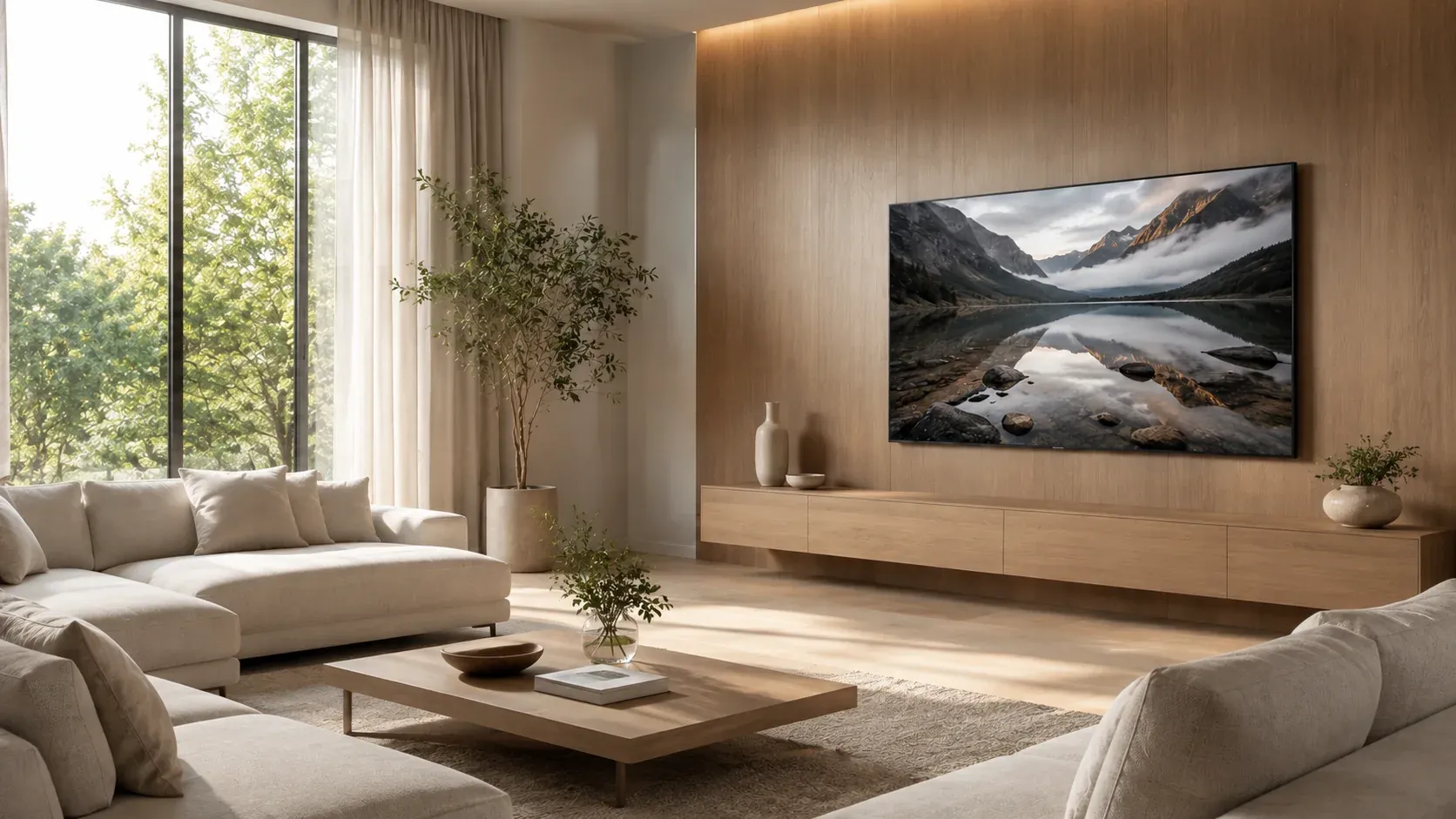
When Is a 65-Inch Prop TV the Right Size for a Showroom or Model Home?
A 65-inch screen is not automatically the “best” size for staging.
It works when the visual weight of the TV matches the furniture, wall and room around it. The correct decision is comparative: would 55 inches feel too small, would 75 inches dominate the setting, and what role should the media wall play in the room?
This section can be used to strengthen your existing Prop TV Size Guide instead of creating another overlapping article.
Start with furniture width and wall composition
The television does not exist by itself. It sits inside a composition that may include:
- a TV console;
- wall panels;
- shelving;
- artwork;
- lighting;
- speakers or accessories;
- negative space around the screen.
A 65-inch prop TV may look balanced above one console and undersized above another.
Before choosing the screen, measure the furniture and review the full wall elevation.
65 vs 55 vs 75 inches: think in visual trade-offs
There is no universal ratio that works for every showroom, but the comparison can be framed clearly.
55-inch prop TV
A smaller screen can work when:
- the room is compact;
- the media wall is secondary;
- the console is narrow;
- the designer wants more negative space;
- the furniture rather than the TV should dominate the scene.
65-inch prop TV
A 65-Inch Prop TV often provides a stronger visual anchor without becoming the only object the customer notices.
It can be a useful middle option for living-room displays where the console and screen need to feel contemporary but balanced.
75-inch prop TV
A 75-Inch Prop TV creates more visual weight and can suit wider walls, larger furniture settings or premium room concepts.
The risk is that a large screen may dominate a smaller room or hide too much of the wall composition.
Where 65 inches often works well
Treat these as examples, not rules.
A 65-inch prop TV may be appropriate for:
- medium-to-large living-room showroom settings;
- model-home media walls where the TV is an important but not oversized focal point;
- contemporary consoles that would visually overpower a smaller screen;
- furniture displays that need a modern screen presence without moving into very large-format territory.
The final decision should still be made from the actual room.
Wall-mounted vs. tabletop placement changes the perception
The same screen can feel different depending on how it is placed.
Wall-mounted
A wall-mounted TV becomes part of the architecture. Height, surrounding panels and empty wall space influence its perceived scale.
Tabletop
A TV sitting on a console is visually connected to the furniture. The width and height of the cabinet become even more important.
When comparing sizes, mock up the actual placement rather than viewing the product image alone.
Use screen artwork carefully
Screen imagery can change how large or visually dominant the TV feels.
A bright, high-contrast image attracts attention. A quieter image can allow the furniture to remain the hero.
Where a prop TV supports a selected screen graphic, treat the artwork as part of the room styling. Do not use unsupported claims about brightness, coatings or anti-glare performance unless those specifications are confirmed for the exact model.
Compare scale with the whole room
For TV sizing, ask:
- How wide is the console?
- How much wall space surrounds the screen?
- How far is the main seating area?
- Is the TV meant to be a focal point?
- Are shelves or panels competing for attention?
- Will the same setup be repeated across multiple stores?
The answer may point to 55, 65, 75 inches or another size.
Sample the size before a multi-store rollout
A size that looks appropriate in a catalog or rendering may feel different in the actual showroom.
For a larger rollout, consider approving one physical sample or full-scale mock-up before standardizing the dimension across many locations.
Record:
- TV size;
- placement;
- console or wall reference;
- mounting approach;
- screen artwork;
- approval photo.
Then use that approved setup as the reference for future stores.
Next step: compare 65 and 75 inches in your actual layout
If you are between two sizes, send the console width, wall width or a room photo.
Compare a 65-inch and 75-inch option against the same composition before deciding.
That is more reliable than choosing the “most popular” size—and it gives procurement a visual standard that can be approved before larger quantities are ordered.