
Oct 12, 2026Real Estate Staging
Luxury Condo Staging with Prop TVs: A Project Planning & Buying Guide
Discover how a dummy TV helped stage a luxury Chicago penthouse, increasing buyer engagement and generating multiple offers within 14 days.
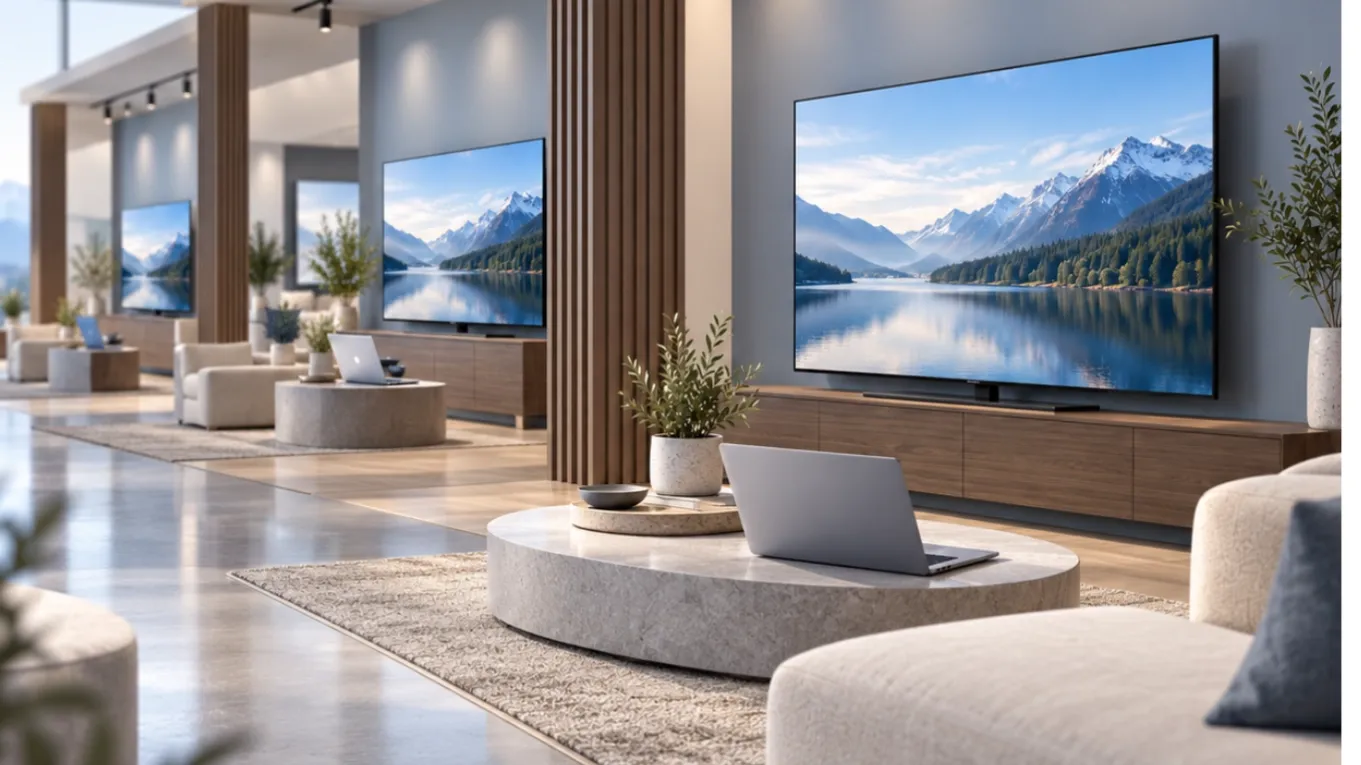
Luxury Condo Staging with Prop TVs: A Project Planning & Buying Guide
Luxury condominium staging requires more than filling an empty room with attractive furniture.
For developers, interior designers, and professional home staging companies, every display element should support the intended lifestyle, complement the architecture, and work within the project's installation and photography requirements.
A television often serves as a visual anchor in a premium living room. Yet a working TV may be unnecessary when the property only needs a realistic, static presentation.
This is where a non-functional Prop TV can be considered.
YIJIA Prop TVs reproduce the physical appearance of televisions for professional staging. They use static screen artwork and do not provide video playback, streaming, software, or interactive functions.
This guide explains how to specify a Prop TV for a luxury condo, coordinate it with furniture and architectural finishes, and prepare the information needed for a professional project quotation.
Project planning note: The recommendations below are an illustrative specification framework. They are not presented as the results of a verified customer project or property sale.
1. Start with the Luxury Condo's Design Brief
Before selecting a television prop, establish the role of the room.
A premium condominium may include an open-plan living area, a dedicated media lounge, a primary bedroom, and a secondary study.
Each space has a different purpose.
The design brief should answer four questions:
- What lifestyle should the finished room communicate?
- Which furniture pieces are the visual priority?
- Where will prospective buyers or visitors first view the room?
- Will the space be used for photography, in-person viewings, or both?
The television prop should be selected only after these decisions.
For example, a wide media cabinet in a contemporary living room may benefit from a strong screen-shaped focal point.
A compact bedroom, however, may already feel complete without a television.
Professional staging is about selecting meaningful details, not placing a device in every available space.
2. Choose the Right Prop TV Size for the Media Wall
The physical proportions of a television can significantly affect a staged living room.
The correct size depends on the wall, media cabinet, furniture grouping, and intended viewing positions.
A practical preliminary selection matrix is:
Room Setting | Sizes to Consider | Design Consideration |
|---|---|---|
Compact condo living room | 43–50 inches | Limited wall and cabinet width |
Standard premium living room | 55–65 inches | Balanced sofa and media cabinet composition |
Spacious open-plan residence | 70–75 inches | Wider entertainment furniture |
Luxury feature-wall setting | 85–98 inches | Large architectural wall or media installation |
These are planning examples, not universal size standards.
The final specification should use the complete external product dimensions rather than nominal screen size alone.
For a larger penthouse-style room, an 85-inch model may be worth evaluating, provided the wall, installation arrangement, and intended composition support it.
Our Prop TV Size Selection Guide explains how to compare display proportions before selecting a final model.
3. Match the Static Screen Artwork to the Interior
A non-functional Prop TV does not need a power supply to maintain its visual presentation.
Its screen image is static.
That makes artwork selection part of the interior design process rather than an electronic content-management task.
For luxury condo staging, consider:
Colour Harmony
Select imagery that complements the upholstery, cabinetry, wall finishes and decorative accessories.
Visual Balance
A highly saturated image may attract more attention than the furniture.
A restrained landscape or architectural image may be more appropriate for some interiors.
Surface Appearance
Matte or reduced-reflection options may help manage certain reflections, depending on the actual product and lighting conditions.
No finish should be assumed to eliminate all glare.
Photography Requirements
Review the final image and surface appearance from the main camera positions.
Artwork should also be legally available for commercial reproduction.
If custom static screen graphics are required, confirm the available configuration and artwork specifications for the chosen model before ordering.
4. Plan the Installation Before Approving the Product
Luxury condos can contain decorative wall treatments, stone finishes, timber panels and integrated cabinetry.
These features may look impressive but should not be assumed suitable for supporting any display product.
The project team must confirm whether the chosen model is intended for wall-mounted or tabletop use.
Wall-Mounted Displays
Check the model's weight, attachment points, mounting method, and supporting structure.
Installation should be assessed and completed by appropriately qualified personnel.
A non-functional display is not automatically safe to mount on a decorative wall or partition.
Tabletop Displays
Check the available cabinet dimensions, stand configuration, stability and customer access.
The model should be positioned in accordance with its supported installation arrangement.
Site Access
For larger display sizes, consider door widths, lifts, corridors, unpacking space and handling requirements.
Confirm these details before finalising the shipping and installation schedule.
A convincing visual display still requires proper physical installation.
5. Evaluate the Display for Photography and Property Viewings
A room that looks attractive during installation may appear different in photographs.
Before final approval, the staging team should review the composition from the perspectives that matter to the project.
Property Photography
Check whether the television appears proportionate, aligned, and visually coordinated with the furniture.
Review reflections, screen artwork, frame appearance, and nearby lighting.
Main Entrance View
The television should support the room's focal point without overwhelming the furniture arrangement.
In-Person Viewing
Consider the angles from which visitors will approach the media wall.
The prop should appear appropriately positioned and should not create an obstruction or physical hazard.
Because the screen image is static, the styling team does not need to manage video playback or unwanted electronic content changes.
However, physical condition, placement, and lighting still need attention.
6. Compare Prop TV and Working TV Requirements
A non-functional Prop TV is not the right choice for every property presentation.
The decision depends on whether the display needs to demonstrate electronic functionality.
Requirement | Non-Functional Prop TV | Working TV |
|---|---|---|
Realistic visual presence | Yes, subject to model selection | Yes |
Video playback | No | Yes |
Streaming or interactive apps | No | Model-dependent |
Electrical power for display operation | Not required | Required |
Static presentation consistency | Built into the physical artwork | Requires appropriate setup |
Physical installation checks | Required | Required |
Surface care and handling | Required | Required |
If the property includes a functional smart-home demonstration or an entertainment system that prospective buyers need to operate, a working device is necessary.
If the objective is a static residential presentation, a Prop TV may reduce unnecessary electronic setup tasks.
The right product depends on the actual project requirements.
7. Review the Complete Project Cost, Not Just the Unit Price
The purchase price of a display prop is only one component of a staging project.
For an accurate comparison, evaluate:
Product Cost
The quotation for the selected model, finish and available artwork configuration.
Packaging and Transport
The protective packing, freight method and actual delivery destination.
Handling and Installation
The labour and site requirements associated with the selected size and mounting arrangement.
Project Duration
Whether the display is needed for a short marketing period or a longer model-home programme.
Reuse Potential
Whether the product can be relocated to another property when its condition and specifications permit.
Replacement Requirements
Whether additional units or alternative sizes may be required for future projects.
Do not assume that a Prop TV will produce a fixed percentage saving.
Any cost comparison should use the actual supplier quotations and project operating requirements.
8. Approve a Representative Product Before a Larger Project
For developers staging multiple residential units, an approved reference model can support consistent purchasing.
Before releasing a larger order, the design and procurement teams may wish to confirm:
- Nominal size and complete external dimensions
- Frame appearance and screen finish
- Static artwork or approved image
- Product weight and installation configuration
- Physical sample appearance
- Packing and handling requirements
- Quantity by room or unit type
- Delivery destination and schedule
Where a representative sample is appropriate, review it in a realistic interior environment.
Save the approved product reference and photographs.
This makes future orders easier to specify and helps different project teams work from the same requirements.
Explore our professional Prop TV collection to identify potential model sizes.
9. Prepare a Procurement Brief for Luxury Condo Staging
A useful quotation request should explain the project, not simply ask for a television price.
The following information helps a supplier understand the scope.
Project Detail | Information to Provide |
|---|---|
Project type | Luxury condominium, penthouse or model apartment |
Location | Country, city and delivery destination |
Room type | Living room, media lounge or bedroom |
TV sizes | Preferred nominal sizes |
Quantity | Units by size and room |
Installation | Wall-mounted or tabletop |
Visual requirement | Frame finish and static artwork |
Sample requirement | Whether physical approval is needed |
Project schedule | Target delivery or installation date |
Future demand | Additional apartments or repeat installations |
Floor plans, room photographs and media-wall drawings can help clarify the requirements.
If the project covers several apartments, include a room-by-room quantity schedule.
A complete brief allows the supplier to review suitable products and discuss a practical supply arrangement.
10. Measure the Right Project Outcomes
Professional staging should be evaluated using evidence relevant to the actual project.
For a Prop TV installation, the project team can directly verify:
- Whether the selected model matches the approved specification
- Whether the installed presentation meets the design brief
- Whether the product arrived in acceptable condition
- Whether installation was completed before photography or opening
- Whether the display remained suitable during the marketing period
Broader property marketing indicators, such as enquiry volume, viewing duration, offer rates or sales timing, may also be monitored by the developer or property marketing team.
However, those results are influenced by many factors, including property pricing, location, market conditions and the overall marketing campaign.
They should not be attributed to a single staging accessory without a suitable evaluation method and supporting evidence.
Frequently Asked Questions
What is the best dummy TV size for a luxury condo?
There is no single best size. The appropriate model depends on wall dimensions, media furniture, room proportions, and viewing positions. A 55-inch or 65-inch model may suit many standard living rooms, while larger models can be considered for spacious interiors.
Does a Prop TV play video?
No. YIJIA Prop TVs are non-functional display models. They use static screen artwork and do not play video, stream content, or operate applications.
Can Prop TV screen artwork be customised?
Custom static artwork can be discussed depending on the selected model and available production options. Final artwork requirements should be approved before ordering.
Is a Prop TV suitable for a luxury penthouse?
It can be appropriate for a static media-wall display when the size, appearance, environmental conditions and installation method meet the project's requirements.
Is a dummy TV automatically safe to wall-mount?
No. Actual product weight, mounting components, attachment points and supporting structure must be checked. Installation should follow the model's requirements.
Can the same product be used in multiple model apartments?
Potentially, provided the model suits each location and its handling and installation requirements can be met.
Can YIJIA supply different sizes for one development?
Mixed-size requirements can be discussed using the project's room schedule, product specifications, quantities and delivery arrangements.
What should I send when requesting a quotation?
Provide the project location, room photographs, preferred TV sizes, quantities, installation method, required date, and any artwork or sample requirements.
Plan Your Luxury Condo Staging Project with YIJIA Props
A successful residential staging project begins with a clear visual concept and a practical product specification.
The television should complement the furniture, support the room's intended lifestyle, and fit the actual architectural conditions.
YIJIA Props supplies non-functional television display models for furniture showrooms, model homes and professional interior staging.
We can review suitable Prop TV sizes, available appearance options, project quantities and supply requirements.
Request a Luxury Staging Project Quote with your floor plan or media-wall photographs, preferred sizes, estimated quantities, installation configuration, project location and target delivery date.
If your project is still in the design stage, you can begin with a model-selection enquiry before confirming a larger order.