
Oct 12, 2026Company & Capability
Custom Branding & OEM Display Props for Furniture Showrooms
Custom branding and OEM display props for furniture showrooms, including branded screen graphics, custom finishes and project-specific display specifications for retail rollouts.
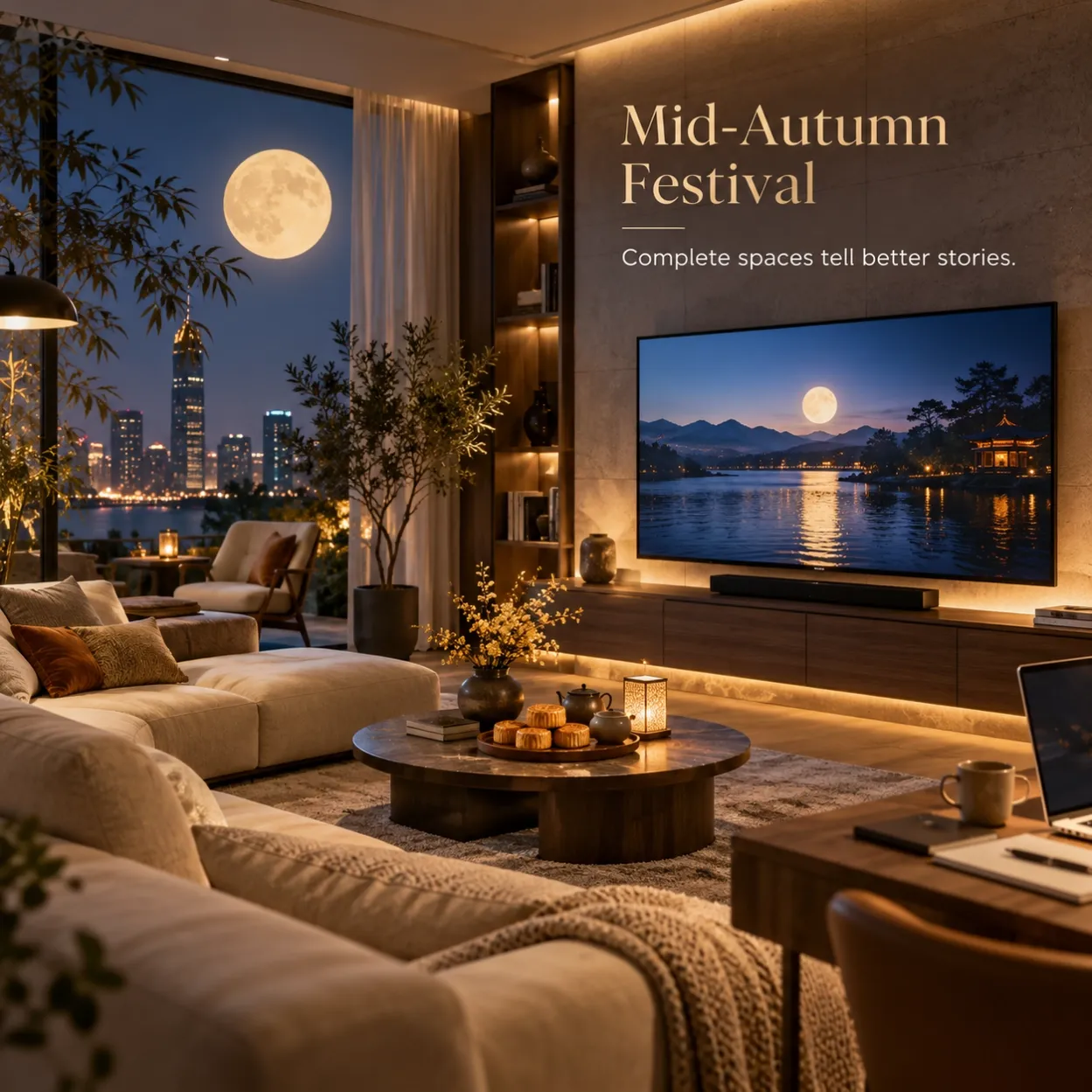
Custom Branding & OEM Display Props: Tailoring Specs to Corporate Design
In enterprise furniture retail, flagship showroom design and multi-store rollout projects, consistency matters.
A furniture collection may be carefully defined through materials, colours, lighting, signage and room-setting guidelines — yet generic display electronics can still introduce visual elements that do not fully match the intended brand environment.
For corporate buyers, visual merchandising teams and showroom planners, display electronics should support the design language of the space rather than compete with it.
That is where custom branding and OEM display props can play a different role.
Instead of treating prop TVs, laptops, tablets and other display devices as isolated accessories, they can be specified as part of the wider showroom system — aligned with the furniture collection, brand identity and rollout requirements.
Why Corporate Showrooms Need More Than Standard Display Props
Off-the-shelf black or silver display devices may work for many general staging applications.
Enterprise retail projects are different.
A flagship furniture collection may use a tightly controlled palette of warm metallic finishes, architectural whites, muted neutrals or distinctive brand graphics.
A premium media console may also require a particular screen proportion, mounting position or visual treatment.
When every other element of the showroom has been carefully considered, display electronics should not feel like an afterthought.
For this reason, OEM projects often begin with a simple question:
How should the display hardware support the furniture, brand and room setting?
From there, specifications can be developed around the actual retail environment.
1. Custom Finishes for Brand and Interior Palettes
Standard electronics are typically associated with black, silver or dark metallic finishes.
However, furniture showrooms and branded interiors may require a more specific visual language.
Depending on the project scope and production requirements, display prop finishes can be developed around corporate design references, including:
- Architectural white
- Matte black
- Silver and metallic finishes
- Champagne-inspired tones
- Other project-specific colour references
For larger OEM programmes, colour references can be coordinated against the wider furniture and interior palette so that the display devices feel integrated with the environment.
This is particularly useful for:
- Flagship furniture collections
- Premium media-wall displays
- Luxury residential showrooms
- Branded retail concepts
- Multi-store visual merchandising programmes
The objective is not to make the display device the centre of attention.
It is to make sure it belongs naturally within the room.
2. Branded Screen Graphics & Marketing Artwork
A prop TV or tablet does not need to display a generic landscape image.
Its screen can also become part of the visual merchandising system.
Custom screen artwork may include:
- Corporate logos
- Brand taglines
- Campaign imagery
- Furniture lifestyle photography
- Collection-specific visuals
- Seasonal promotional artwork
- QR codes linking to digital catalogues or product information
For furniture retailers, this creates an opportunity to connect the display device with the actual collection being presented.
For example, a prop TV placed above a media console can use screen artwork taken from the same furniture campaign.
A tablet displayed in a bedroom or home-office setting can use branded visuals that support the wider styling direction.
The result is a more coherent room setting in which furniture, accessories and display details communicate the same story.
3. Project-Specific Dimensions and Mounting Requirements
Corporate furniture programmes do not always fit standard specifications.
A proprietary media console may have unusual proportions.
A wall system may require a specific visual screen size.
A trade-show booth may use lightweight temporary walls.
A showroom concept may require both wall-mounted and desktop display formats.
For these projects, dimensions, mounting requirements and installation methods can be reviewed as part of the OEM specification process.
Depending on project feasibility and volume, this may include:
- Project-specific display sizing
- Alternative mounting solutions
- Bracket compatibility
- Desktop or wall-mounted configurations
- Custom screen proportions
- Packaging designed around store or project kits
The important point is that the specification begins with the application — not simply with an existing catalogue SKU.
From Product Customization to Showroom Standardization
For a single flagship showroom, customization is primarily about design.
For 20, 50 or 100 locations, it becomes an operational issue.
Once a furniture retailer has defined an approved display specification, the same combination can be repeated across new stores, showroom refreshes and seasonal updates.
A standardized programme may define:
- Which TV size is used with each media-console width
- Which screen artwork belongs to each furniture collection
- Which finish is approved for the brand
- Which laptop or tablet format is used in home-office settings
- Which mounting method should be used
- How products should be packed for individual stores
- How replacement graphics or display components should be supplied
This turns a collection of individual props into a repeatable showroom system.
Why This Matters for Multi-Store Furniture Retailers
Large retailers are rarely dealing with only one showroom.
They may be opening new locations, updating existing stores, launching new furniture collections or coordinating regional visual merchandising teams.
Without a clear standard, display details can quickly become inconsistent.
One store may use one screen size.
Another may source a different product locally.
A third may use real electronics with visible cables.
The result is unnecessary variation across the retail network.
OEM display programmes can help create a more consistent visual language while making implementation easier for local teams.
This is especially valuable where the goal is:
Central standards, local execution.
The corporate team defines the specification.
The local store receives a clear, ready-to-use display solution.
A Typical OEM Showroom Project
A project can begin with something as simple as one furniture collection or one showroom zone.
For example:
Living Room / Media Wall
A furniture brand launches a new media-console collection.
The display specification may define:
- Recommended prop TV size
- Wall-mounted or desktop configuration
- Approved screen artwork
- Approved finish
- Packaging requirements
Bedroom / Home Office
A bedroom collection includes a writing desk or compact workspace.
The specification may include:
- Prop laptop
- Tablet or phone
- Brand-aligned screen imagery
- Store-ready placement guidance
Multi-Store Rollout
Once the visual combination has been approved, the same specification can be reproduced for additional stores.
This is where OEM customization becomes more than a design feature.
It becomes a repeatable retail tool.
The Strategic Value of Custom OEM Display Props
For corporate buyers, custom display hardware is not simply about making a prop look different.
The larger value is alignment.
Brand Alignment
Display details support the same visual language as the furniture collection.
Showroom Consistency
Approved specifications can be repeated across multiple locations.
Visual Merchandising Control
Screen imagery and display details can support campaigns, collections and seasonal updates.
Operational Simplicity
Non-powered display electronics avoid the wiring, power and maintenance requirements of functional consumer devices.
Rollout Readiness
Approved products can be organised into store-ready combinations for new locations and showroom refreshes.
The product is only the tool.
The real value is making the final showroom presentation easier to control, repeat and scale.
Who Is This Suitable For?
Custom branding and OEM display programmes are particularly relevant for:
- Multi-store furniture retailers
- Furniture manufacturers
- Flagship showrooms
- Visual merchandising teams
- Retail concept teams
- Store planning departments
- Interior design brands
- Real estate presentation centres
- Hospitality mock-up projects
- Exhibition and trade-show environments
Frequently Asked Questions
Can screen graphics use our own brand photography?
Yes. Project-specific screen artwork can be developed using supplied brand graphics, lifestyle photography or campaign imagery, subject to the agreed production specification.
Can we use different artwork for different collections?
Yes. Different room settings or furniture collections can use different screen visuals, allowing the display electronics to support the story of each collection.
Can finishes be customized?
Project-specific colour and finish requirements can be reviewed for OEM orders. Feasibility will depend on the product, required finish, order volume and production process.
Can you customize dimensions?
Certain project-specific sizing or mounting requirements can be assessed. For projects requiring non-standard dimensions, the application, quantities and installation requirements should be reviewed before confirming the specification.
Is OEM only suitable for very large orders?
Not necessarily.
A sensible approach is often to begin with a defined sample or pilot specification, confirm the visual result, and then determine whether it should be scaled across additional locations.
Can products be prepared as store-specific kits?
For multi-location programmes, product combinations and packaging can be planned around store or project requirements, helping reduce sorting and setup work during rollout.
Start With the Room, Not the Product List
The best OEM specification does not begin by asking:
“Which prop TV do you want?”
It begins by asking:
“What should this room communicate, and how will the specification be repeated?”
From there, the right screen size, finish, artwork, mounting method and supporting devices can be defined around the actual furniture collection and showroom environment.
That is how custom display props move from being individual accessories to becoming part of a corporate retail standard.
Related Resources
➔ Prop Electronics Category Overview
Explore our range of realistic, non-powered display electronics for furniture showrooms, staged spaces and commercial environments.
➔ Furniture Showroom Solutions
Explore showroom presentation, multi-store rollout and display-standardization solutions.
➔ Multi-Store Furniture Showroom Rollout
See how standardized display electronics can support repeatable showroom execution across multiple locations.
Planning an OEM or Custom Showroom Project?
If you are developing a new furniture collection, flagship showroom or multi-store retail programme, send us the room setting, furniture dimensions, desired display format or project requirements.
We can review the application first and help define a practical display specification before moving into samples, pilot testing or rollout planning.